
We help retailers, brands, importers and distributors develop smarter outdoor storage products — from market insight and product design to engineering validation and launch support.
Container Loading Optimization
Packaging & Container Loading
An outdoor structure is heavy and long with multi-component. The pack is not a box we put it in at the end — it is the part of the product that decides your freight cost, your unloading bill, damage rate and whether the shipment clears the border. DiBiBi engineers it as a specification: per route, per destination.
50 %
Maximum void space the EU allows in e-commerce, grouped and transport packaging under PPWR Article 24 — filler does not count as fill
$1.51–4.40
Per-unit Amazon packaging fee on non-SIPP-certified bulky products since 15 January 2026
15 kg
Weight above which a carton inbound to Amazon EU needs a Heavy Package label on five faces; 30 kg for mechanical lift
98 %
Average container utilization DiBiBi achieves on a planned load
Compare Three Package Methods
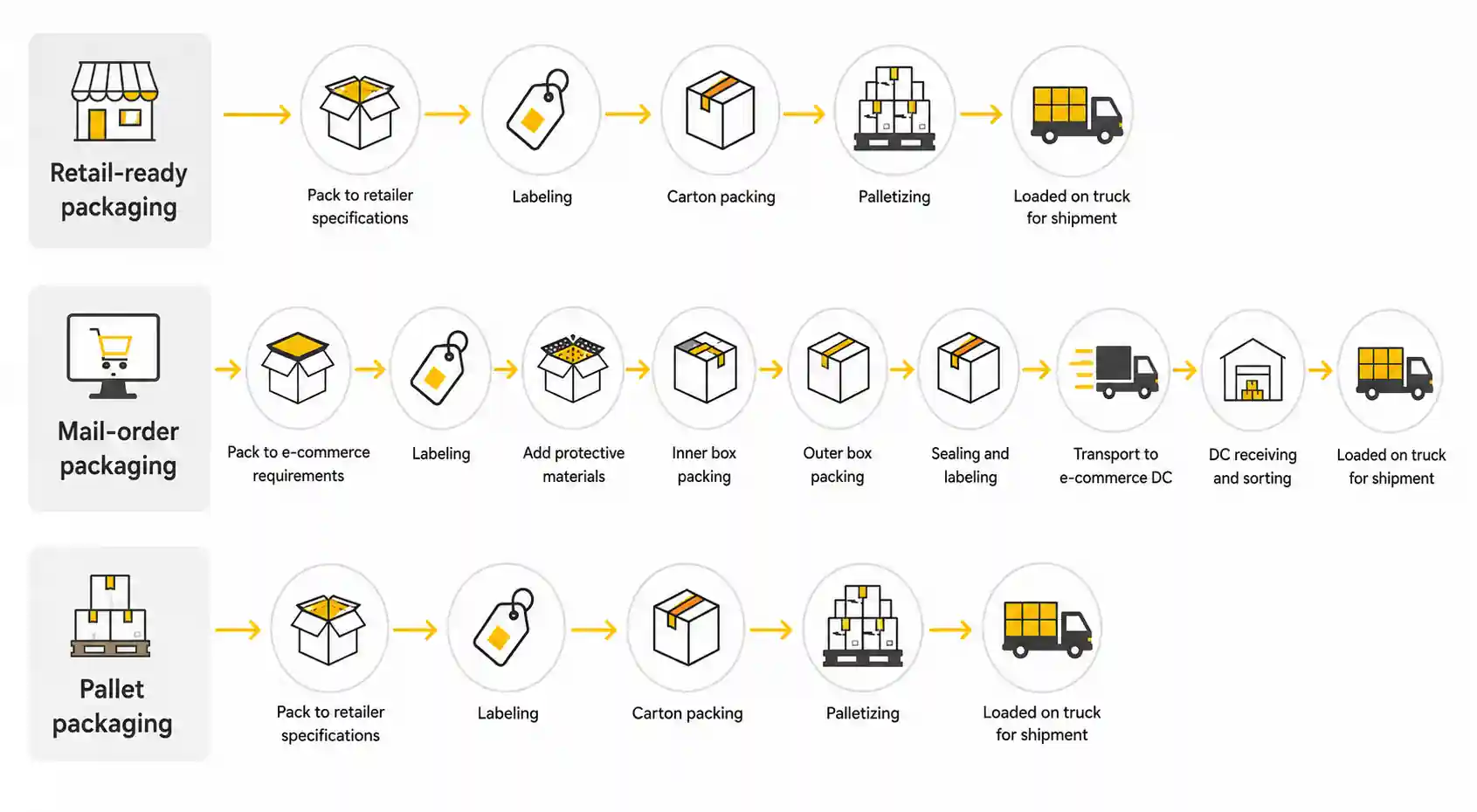
Buyers often ask for “good packaging”. There is no such thing in the abstract — a pack is good or bad only against the journey it has to survive and the person who opens it. These are the three journeys a DBB product takes, and they pull the design in opposite directions. It is why we ask about the route before we ask about the product.
| Retail-ready | Mail-order / e-commerce | Pallet / bulk B2B | |
|---|---|---|---|
| Who opens it | Store staff, on the shop floor, in a hurry, with a knife | The end consumer, alone, at a front door, with no equipment | A forklift operator who never touches the goods themselves |
| The journey | Container → importer’s DC → store back room → shelf | Container → fulfilment centre → parcel sortation → van → doorstep | Container → racking → trade counter or installer’s van |
| What attacks it | Stacking load in the DC, repeated part-pallet handling, shelf abrasion | 10–20 individual handlings, conveyor drops, chutes, being thrown, weather on a doorstep | Compression from double-stacking, forklift tine strikes, weeks of sea vibration |
| Rules that govern it | The retailer’s own vendor manual, PPWR minimisation, national EPR registration and fees, barcode standards | Marketplace programmes (Amazon SIPP / SIOC / FFP), ISTA 3A and ISTA 6-Amazon transit testing, carrier weight and girth limits, PPWR void ratio | ISPM 15 timber treatment, stacking-strength specification, road axle weight limits at destination |
| How it fails | Delivery refused or charged back; pack won’t merchandise; store labour blows out | Damage rate, one-star reviews, returns — and loss of platform certification | Stack collapse, crushed bottom layer, a container that can’t be legally trucked |
| Who pays the return leg | Usually the importer — goods return to their DC and must still be re-sellable | Consumer returns within 14 days under the EU right of withdrawal; a box that won’t re-close comes back damaged and is written off | Rare, but a rejected pallet is a full-container-value problem |
| The cost lever | Shelf labour and pallet cube | Surcharge avoidance, damage rate, return rate | Container utilisation and destination unloading labour |
Why this Matters Commercially
A pack optimised for one route is usually wrong for another. A retail-ready case is designed to be opened fast and merchandised — send it through a parcel network unaided and it arrives crushed. A mail-order carton engineered to survive a conveyor is over-specified, and therefore over-priced and over-taxed under EPR, if it only ever travels palletised to a DC.
The engineering work is choosing correctly, not building everything to the highest specification. The three screens that follow are the three columns above, in detail.
Retail-Ready Packaging
Built to Clear the Border and the Back Room
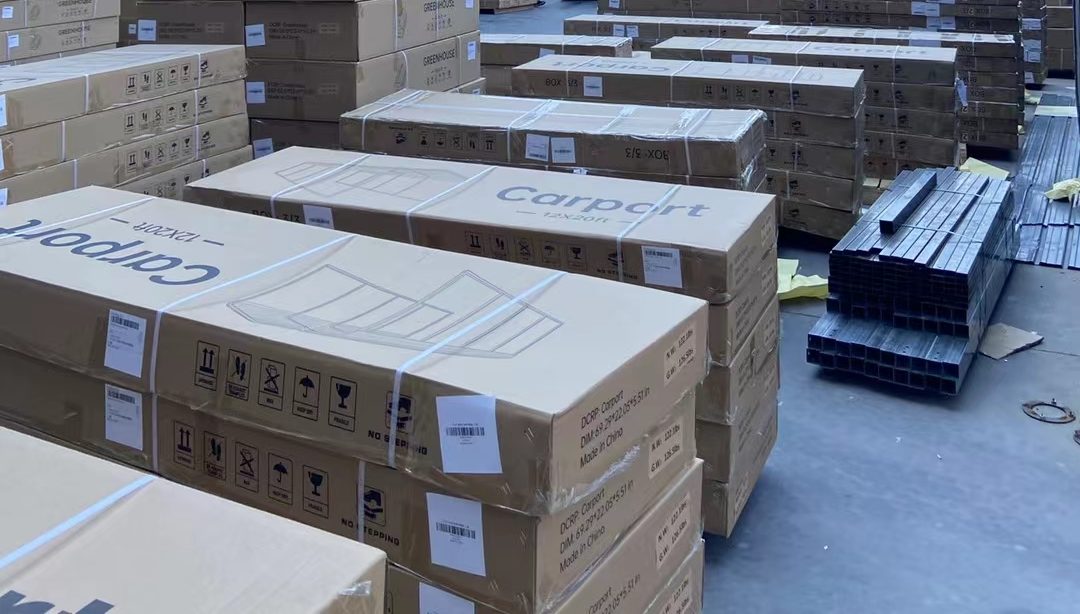
Each pack is engineered to comply with the destination regulations and the retailer’s requirements. We engineer to minimise material use and maximise the use of truck loading space.
It has to be legal in the destination country, not the origin country
Packaging compliance sits with whoever places the goods on the market, and it is national. We build the pack against the destination’s rules and hand over the data the importer needs to register it.
EU PPWR (Reg. 2025/40) — the main body became applicable on 12 August 2026. Packaging must be minimised to what is functionally necessary, and void in e-commerce, grouped and transport packaging is capped at 50% (full enforcement from 2030). Air pillows, foam, wood wool and paper shred do not count towards filling the box.
National EPR registration — Germany’s LUCID/VerpackG, France’s Triman marking, the UK’s pEPR. The importer pays per tonne of packaging placed on the market, modulated by recyclability. Every gram of board and every mixed-material laminate we add is a recurring cost on their P&L, not a one-off.
A registration data pack — material and weight of every packaging component, per SKU, so the buyer’s compliance filing is a copy-paste rather than a project. Confirm we can issue this per SKU as standard.
The retailer’s vendor manual — most large European and North American retailers publish a binding packaging and labelling specification and charge back deliveries that miss it. We build to the buyer’s manual and confirm it at sample approval, before the order runs.
ISPM 15 — every solid-timber pallet, crate and brace heat-treated and stamped. Non-compliant timber is a border event, not a paperwork event: refusal, re-export or fumigation, at the importer’s cost.
Mail-Order & E-Commerce Packaging
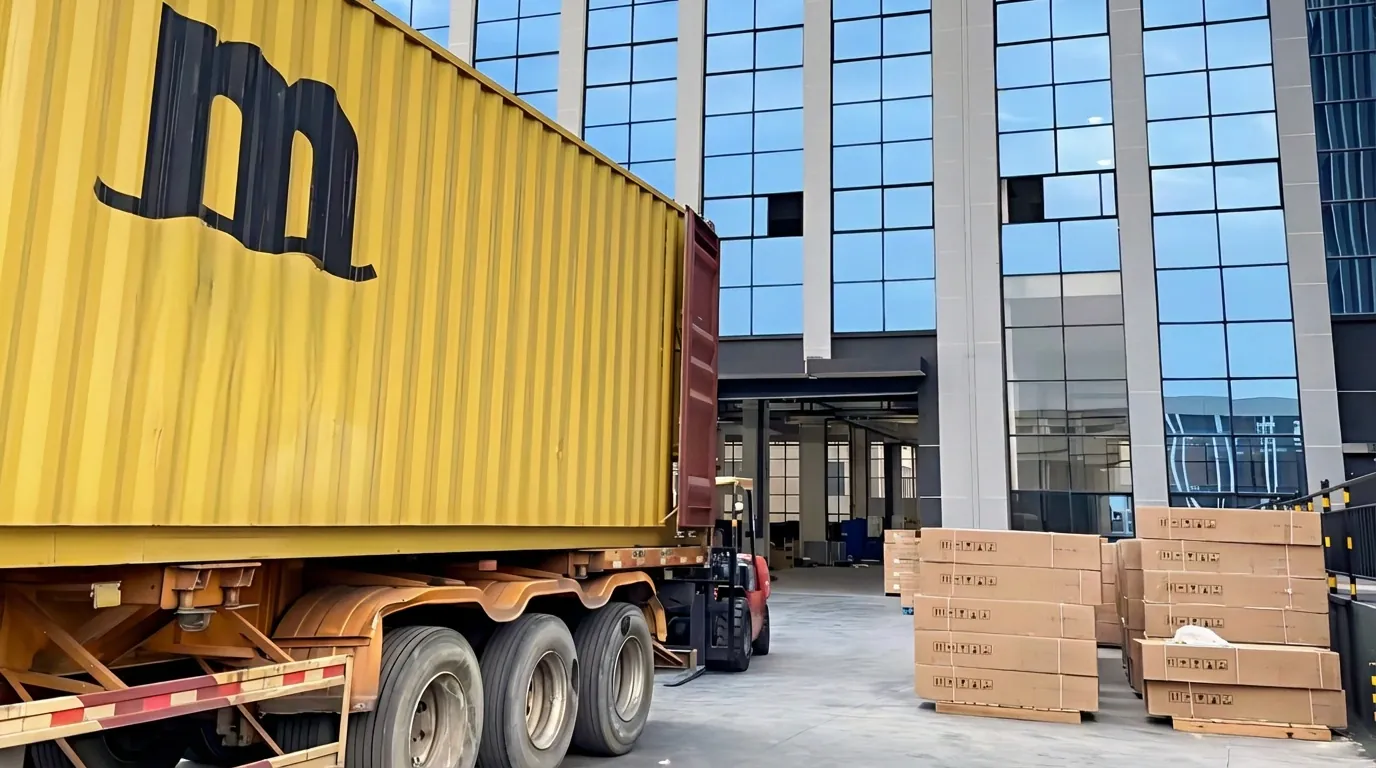
Sold online, a DiBiBi outdoor product travels the last mile with no pallet, no shrink wrap and nobody watching. It is handled ten to twenty times individually, dropped from conveyors, sorted on chutes and left on a doorstep in the rain. And because it is heavy and long, it sits exactly where every carrier and every marketplace applies its penalties.
01
Splitting into multi-box sets
A shed that is one item on the invoice is three or four parcels in the network. We split along assembly logic — panels, frame, hardware, glazing — so each box stays inside the carrier’s single-handler weight and girth limits, is numbered “1 of 3” on every face, and ships as a reconcilable set. One oversize parcel can cost more than three standard ones, which makes this the largest single lever on e-commerce freight.
02
Carrier thresholds are the design constraint
Above a carrier’s weight or girth limit a parcel leaves the standard network: surcharge, slower lane, sometimes a two-person delivery, sometimes refusal. Limits differ by carrier and by country — a pack that is compliant in Germany can be surcharged in the UK. We design against the actual carrier mix the client uses, which is why we ask for it up front.
03
Marketplace packaging programmes
Amazon’s SIPP framework has two tiers. SIOC — Ships In Own Container — means the unit ships with no Amazon overbox, certified by passing the ISTA 6-Amazon.com SIOC drop sequence. FFP adds curbside-recyclable material and the requirement that a customer can get the contents out within 120 seconds without excessive cutting. Blister packs, plastic inserts, loose-fill peanuts and shredded paper are not permitted.
04
Non-certified packaging is now per-unit fee
Since 15 January 2026 Amazon applies a packaging fee of roughly $1.51–$4.40 per unit to small- and large-bulky products that are not SIPP-certified — and from 1 January 2026 it stopped providing FBA prep, making the seller responsible for arriving compliant. On a heavy garden product at volume that line item can decide whether the SKU is viable at all.
05
Inbound rules bite before the sale
Cartons inbound to Amazon EU need a Heavy Package label from 15 kg and a mechanical-lift label above 30 kg; in North America the thresholds are Team Lift at 50 lb and mech lift at 100 lb, with labels on the top and all four sides. Repeat failures escalate from a defect notice, to repackaging charges, to suspended inbound privileges.
06
The customer has to be able to send it back
EU distance-selling rules give the consumer 14 days to withdraw. For a bulky product the outer must survive being opened, hold together while the customer repacks it, and close again without tape gymnastics. Where the seller’s terms make the consumer pay return carriage, a box that will not re-close turns every return into a write-off and a dispute.
Pallet Packaging
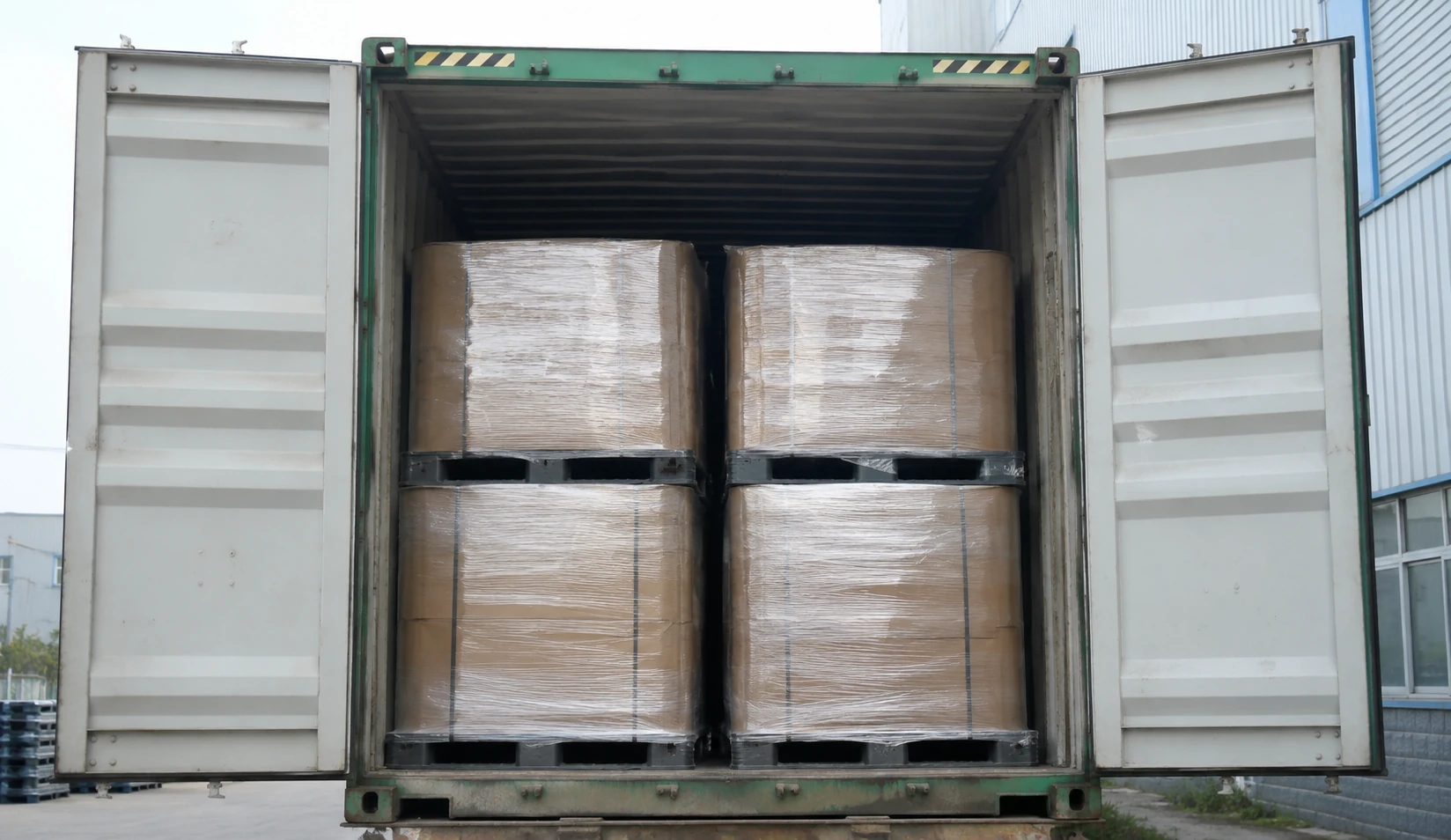
Pallet footprint is a container decision, not a warehouse decision
A 40′ container has roughly 12.03 m of internal length and 2.35 m of internal width; a high cube adds height (about 2.69 m internal) but no extra floor. Single-stacked, that floor takes about 24–25 EUR pallets at 1200×800 mm, or about 20–21 industrial pallets at 1200×1000 mm. A 20′ takes about 11 and 9–10 respectively.
If the buyer’s racking is built for 1200×1000 and we ship 1200×800, they re-palletise on arrival — labour we caused. If they can take 1200×800 and we ship 1200×1000, we have given away four pallet positions per 40′. We establish which footprint the receiving warehouse runs before we fix carton size, because carton size is derived from pallet size, not the other way round.
Cartons sized to tile the deck — a carton that leaves a 90 mm strip unused on every layer wastes that strip in every container, forever.
No overhang, no underhang — cartons flush to the deck edge. Overhang is the leading cause of crush damage in the bottom layer; underhang throws away cube and reduces stacking strength.
Stacking strength specified, not assumed — board grade and case design chosen for the compression load of the layers above, plus a safety factor for humidity and voyage time. Corrugated loses a significant share of its strength in sustained high humidity, which is precisely the condition inside a container crossing the tropics.
Height built to the destination — to the buyer’s racking beam height, or to a double-stackable height inside the container, whichever saves more.
ISPM 15 heat-treated and stamped, EUR/EPAL or one-way export pallet as the route justifies.
Container Loading Plans
01
Container Selection
Whether the order ships best as 20’GP, 40’GP or 40’HQ, with cost per unit shown for each option.
02
Cube and Payload Utilisation
Stated as percentages, so you can see whether adding units to fill the box is worth it.
03
Pallet Pattern and Orientation
The exact floor layout, and whether double-stacking works for this SKU mix.
04
Numbered Loading Sequence
Collaboratively administrate empowered markets via plug-and-play networks. Dynamically procrastinate B2C users after installed base benefits. Dramatically visualize customer directed convergence.
05
Weight Distribution
Completely synergize resource taxing relationships via premier niche markets. Professionally cultivate one-to-one customer service with robust ideas.
06
Securing Plan
Airbags, void fill, lashing and bracing marked on the drawing.
07
Mixed-SKU Consolidation
several products in one container without burying the fast-moving lines at the nose.
08
Crate Construction Where the Product Needs it
Heavy items low and over the bearers, all six inner faces cushioned so nothing rests against bare timber, goods immobilised before they are cushioned, forklift access on the correct faces, gross weight and centre of gravity marked outside.
Carton Labeling Optimization
Identified without being opened
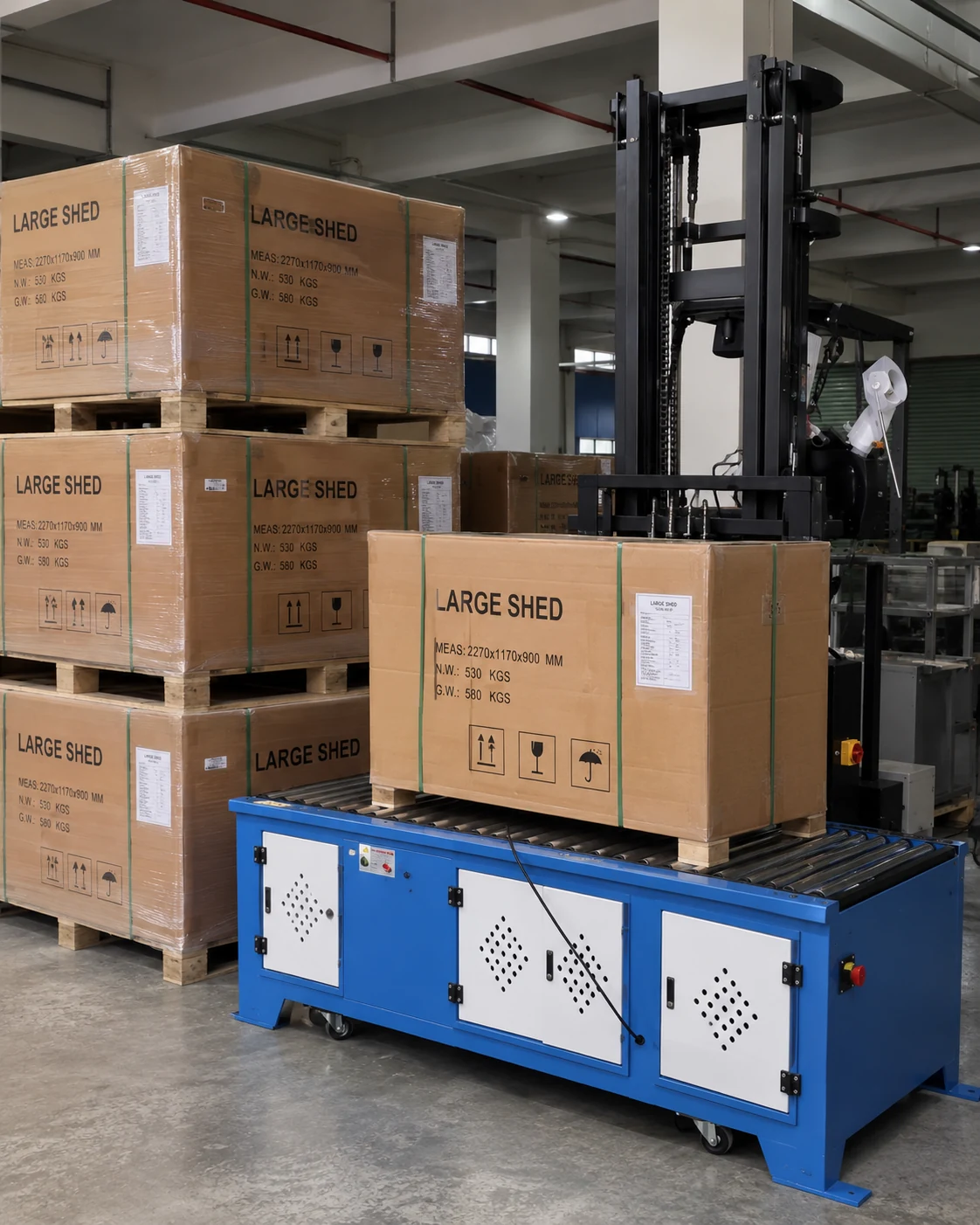
DiBiBi prints to the standard your goods-in process expects, on the faces the scanner actually sees.
Standard data block — SKU, description, quantity, gross and net weight, carton dimensions, country of origin, PO or batch reference.
Barcodes at the right level — EAN-13 or UPC on the consumer unit, ITF-14 on the shipping carton, GS1-128 with SSCC on the pallet, FNSKU where goods go inbound to a marketplace fulfilment centre.
Handling and safety marks — this way up, keep dry, do not stack, plus Heavy Package / Team Lift marking where the destination’s inbound rules require it.
Customisation service — on orders over 500 units we produce a fully customised label: your colours, your layout, your wording, and any additional information your market or your buyer asks for.
Retailer vendor-manual compliance — label format, content and placement built to the receiving retailer’s own specification.
Spare Parts Packaging & Replacement Parts Kits
A missing bracket should never become a returned shed. For a heavy outdoor product the economics are brutal — return carriage on a full unit can exceed the value of the part that failed. We package the after-sales range as a product in its own right, so a distributor can hold stock, identify a part in seconds and send it as a parcel.
Packed to Travel Alone
No pallet, no neighbours, no protection but its own:
- Long profiles protected against bending — the failure mode is a bent extrusion, not a broken one
- Glazing and panels edge- and corner-protected
- Hardware bagged by assembly step, so the customer opens one bag per stage rather than sorting a heap of fixings
- Labelled with the part number that appears in the assembly manual, so it is picked off a shelf without opening the box
- Sized to stay inside standard parcel limits wherever the part geometry allows
A handful of SKUs Instead of Hundreds
Pre-built kits covering the components most often needed
- Fixings and fasteners kit
- Seals and weather-strip kit
- Glazing clips and panel retention kit
- Door and lock hardware kit
- Confirm the actual kit range
Plan the container before you book it
Send us your order or product portfolio, destination details, and intended route to market. DiBiBi will assess the shipment requirements and develop a comprehensive packaging and load optimisation specification.